
Ellis County Court Records After a Jail Arrest
An Ellis County arrest usually starts in the custody system at the Wayne McCollum Detention Center, operated by the Ellis County Sheriff's Office under Sheriff Brad Norman. The jail record may show that a person was booked, held, bonded out, or released, but the court record starts when the criminal allegation is placed into the court system. The Ellis County and District Attorney, Lindy Beaty, prosecutes felony, misdemeanor, and juvenile cases for the county and the State of Texas. That prosecutorial screening is why booking charges can differ from the charges that later appear in court records after an arrest.
Use jail inmate records when the immediate question is current custody, booking timing, bond availability, or whether the person is still housed at the jail. Use jail roster mugshots when the question is whether a booking photo is publicly visible or can be requested. Court records after a jail arrest answer a different question: what formal charge was filed, what case number was assigned, what hearings or bond conditions exist, and how the charge ended or remains pending.
How to Find Ellis County Court Records After an Arrest
Ellis County links court-record users to LGS Online Solutions through the county's online records search information page. The official county instructions say searching is free, guest login can view index information and previews, and a registered account is needed to purchase full images. Court records are searched by selecting the office and record type after login, such as Criminal, then using the criteria shown for that record type. For a new arrest, allow time for booking, prosecutor review, and clerk processing before assuming no case exists.
- Start with the jail roster or Jail Information line if custody is the immediate issue, then move to the court search once a filing may exist.
- Open the Ellis County online records information page or the LGS Online Solutions portal linked by the county.
- Use Guest Login for index access, or register with a valid email if public images must be purchased.
- Select the proper office and record type, such as Criminal, then search by defendant last name or case number if known.
- Open More Information for case details and Images for public documents when the portal offers that option.
- For older, restricted, or image-unavailable records, contact the clerk office that maintains the record.
The Ellis County online records search information page introduces the county's LGS search process and image-purchase rules.
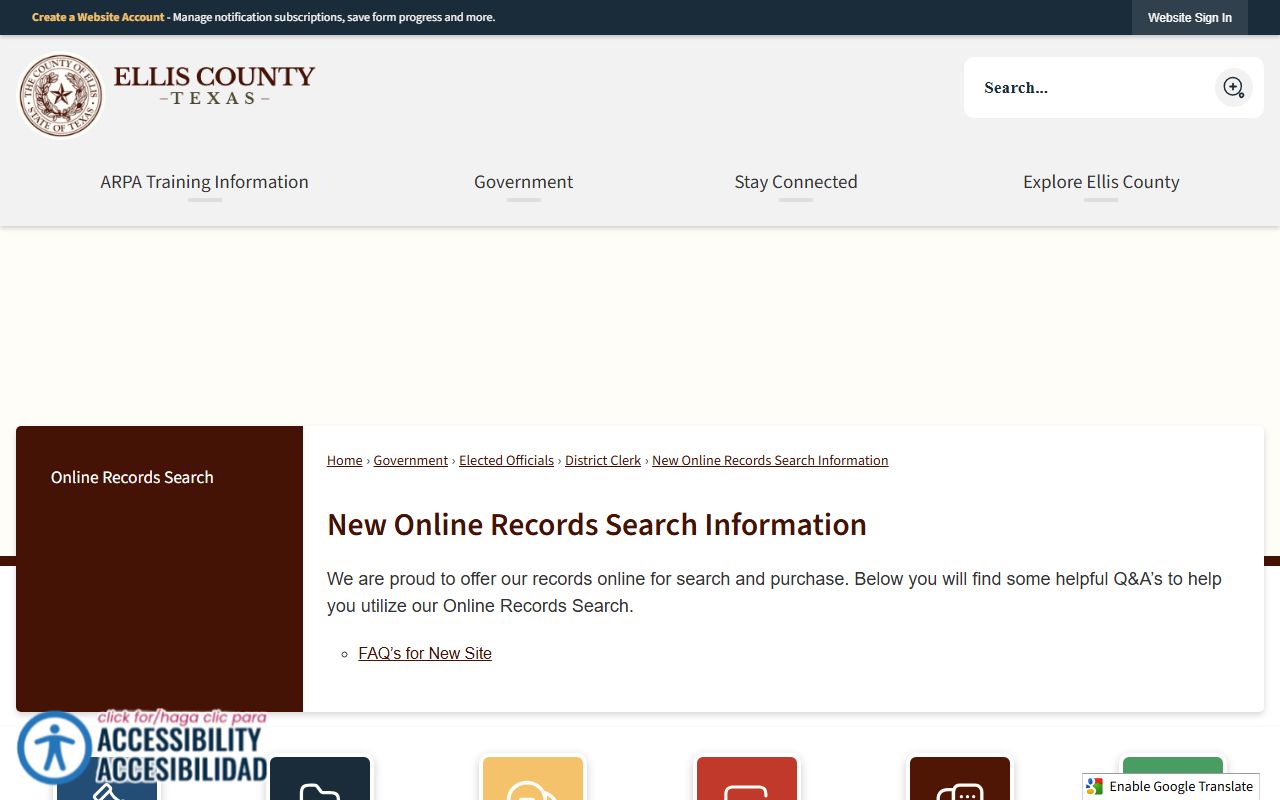
That county page matters because it is the official path from a jail arrest question to the public court-record index, instead of relying on a commercial background-check result.
LGS Login and Search Options for Court Records After Arrest
The LGS portal has a login screen before the court-search fields appear. The research did not expose the full post-login search form from static HTML, so the confirmed field list is limited to the login and county-described search workflow. After entry, the county Q&A says to select the office and record type, then use criteria shown for that record type, such as last name.
| Field or Option | Type | Required | Use |
|---|---|---|---|
| Email Address | Text | Yes for account login | Used for registered access and image purchase. |
| Password | Password | Yes for account login | Hidden credential field for registered users. |
| Login | Button | No | Submits registered account credentials. |
| Guest Login | Button | No | Opens index viewing without a registered account. |
| New Account | Link or button | No | Creates an account with a valid email for image purchase. |
| Forgot Your Password? | Link | No | Starts password reset for an existing account. |
| Post-login search criteria | Record-type fields | Varies | Select office and record type, then use criteria such as last name or case number. |
The LGS Online Records Search portal is the county-linked entry point for guest login and registered access.
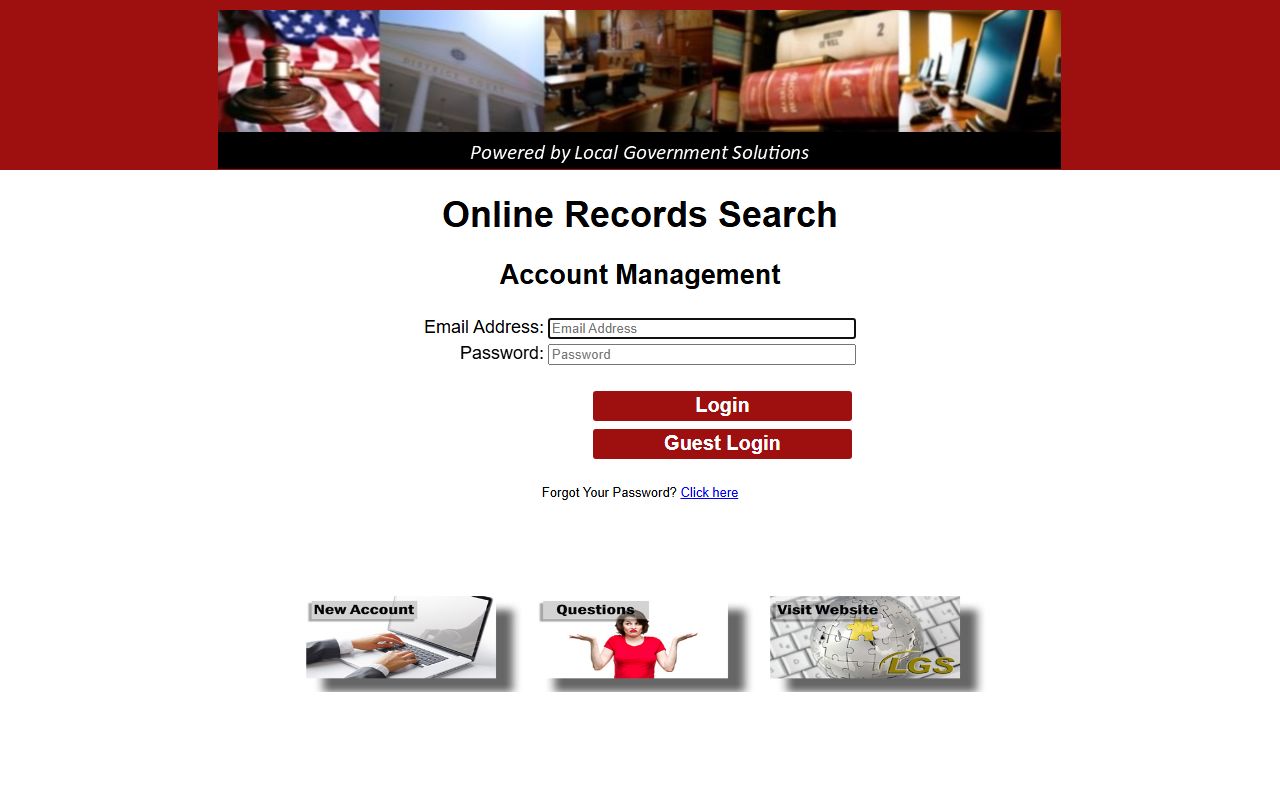
For court records after a jail arrest, the practical value of LGS is the case index and public document image path, not current custody confirmation.
How Charges Get Filed After an Arrest: Complaint, Information, and Indictment
Booking charges are often the earliest public description of why a person entered jail. A formal court case depends on a charging document. Texas criminal cases can involve complaints, informations, and indictments depending on charge level and procedure. Prosecutors review law-enforcement reports, evidence, and applicable law before deciding what to file. That review is the point where a jail arrest becomes a filed court record with a case number and court activity.
| Document | Who Usually Creates It | Common Use | Why It Matters |
|---|---|---|---|
| Complaint | Officer, complainant, or prosecutor through sworn allegation | Initial accusation or misdemeanor-related filing | May support an arrest, warrant, or early criminal proceeding. |
| Information | Prosecutor | Non-indictment prosecution, often misdemeanor and some felony procedure | Shows the charge the prosecutor is formally pursuing. |
| Indictment | Grand jury | Serious felony prosecution | Reflects a grand-jury charging decision and moves the felony case forward. |
Charge Status in Court Records After an Arrest
Charge status can change after arrest. A booking entry can show an allegation used at intake, while the prosecutor may later file a different count, reduce a charge, add a charge, dismiss a charge, or proceed to plea or trial. Read each charge separately because one case can contain several counts with different results. A dismissed count is not the same as an expunged record, and a pending charge is not a conviction.
| Status | What It Means | Records Note |
|---|---|---|
| Pending | The charge remains active and has not reached final disposition. | Check court dates, bond conditions, and later docket entries. |
| Filed | The prosecutor has placed a formal charge into the court system. | The filed charge may not match the original booking wording. |
| Amended or Reduced | The charge was changed by prosecutor action, plea negotiation, or court order. | Compare the original count with the final disposition. |
| Dismissed | The court charge ended without conviction on that count. | The public record may still exist unless sealed or expunged. |
| Nolle Prosequi | The prosecutor declines to continue prosecution on that count. | It is a dismissal-style result, not automatic record destruction. |
| Convicted | The charge ended in a guilty plea, finding, or verdict. | Look for judgment, sentence, fines, probation, or confinement terms. |
Bond and Release After an Arrest
Texas Code of Criminal Procedure Chapter 17 governs bail. Article 17.15 requires bail to be high enough to reasonably assure appearance, but not used as an instrument of oppression, and it directs decision makers to consider the offense, ability to make bail, future safety, and other statutory factors. Locally, the Wayne McCollum Detention Center page says the public processing area includes bond and release areas where people may post bonds, pay fines, or retrieve inmate property. The inspected ECSO pages did not publish online bond-payment methods or endorsed bonding companies, so current payment rules should be confirmed with Jail Information at 972-825-4931.
| Bond Type | How It Works | Ellis County Note |
|---|---|---|
| Cash Bond | The full bond amount or authorized cash-equivalent is paid to secure release. | Accepted payment methods were not published in inspected ECSO pages. |
| Surety Bond | A licensed bail bond company posts bond under a contract. | Texas permits commercial bail, but no specific bondsman should be treated as official. |
| Personal Recognizance or Personal Bond | The court releases the defendant on a promise to appear, often with conditions. | Availability depends on court order, charge, history, and any hold. |
| No-Bond Hold | Release is not available on a charge or hold until court action. | Can involve warrants, parole holds, violent charges, or another agency's hold. |
| Detainer or Hold | Another agency has requested custody, notice, or transfer. | Bonding out on Ellis charges may not release the person if another valid hold remains. |
Warrants That Lead to Court Records After an Arrest
The ECSO Warrants Division searches for and apprehends people wanted by written order of Ellis County District and County Courts, and it also attempts arrest warrants from other agencies nationwide within Ellis County. The public research did not locate an official active-warrant search form. If a warrant is suspected, call ECSO at 972-825-4901 or check the relevant court record. Bench warrants may appear in a case docket, while arrest warrants and fugitive warrants can lead to a jail booking after service.
The ECSO warrants page describes the local warrants and fugitive transport function.
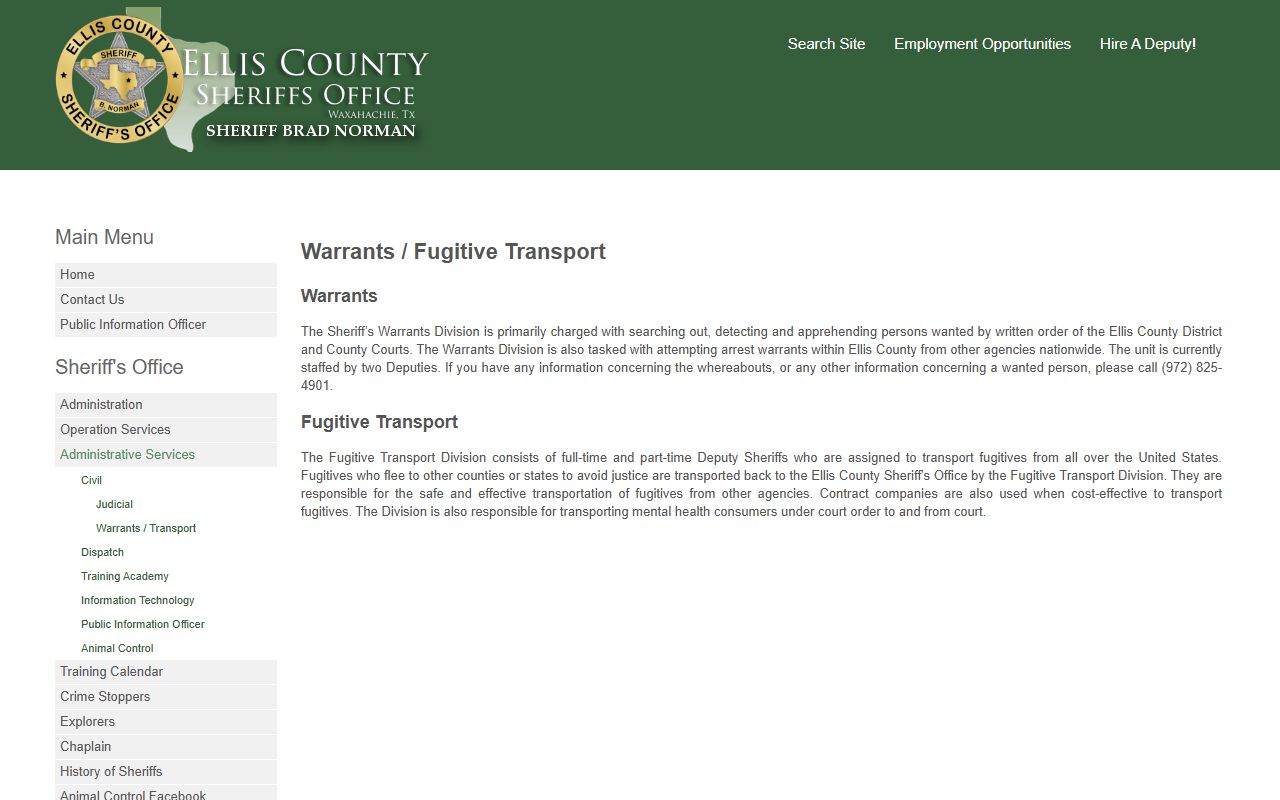
This source is useful when an arrest follows a court order rather than a new on-view offense, especially when the court case and jail booking need to be read together.
Charges vs. Convictions in Ellis County Court Records
A charge is an accusation filed or pursued in the criminal case. A conviction is a final result after a guilty plea, verdict, or finding. This distinction is central to court records after a jail arrest because public indexes may show an arrest-related charge long before any final outcome exists. Do not treat a booking charge, warrant entry, complaint, or pending information as proof of guilt.
| Charge | Conviction | |
|---|---|---|
| Stage | Accusation or filed count after arrest review. | Final finding, plea, or judgment. |
| Proof Level | Supported by probable cause or prosecutorial filing standards. | Requires guilty plea, verdict, or legally sufficient finding. |
| Record Meaning | Shows what was alleged or filed. | Shows legal responsibility and sentence or conditions. |
| Possible Outcome | May be amended, reduced, dismissed, or tried. | May result in jail, prison, probation, fine, or other judgment terms. |
Sealed vs. Expunged Arrest Records
Texas Code of Criminal Procedure Chapter 55 covers expunction procedures for eligible arrest and criminal records. Sealing or nondisclosure is different from expunction. The research supports a cautious approach: public court and sheriff records can be withheld or redacted when law, court order, juvenile confidentiality, active investigations, medical information, victim or witness details, or other protected categories apply. A dismissal alone does not make every visible record disappear from every public system.
| Sealed or Nondisclosed | Expunged | |
|---|---|---|
| Public Visibility | Usually hidden from ordinary public access, subject to the order. | Treated as removed or destroyed under the expunction order. |
| Government Access | Some agencies may retain limited access under Texas law. | Access is much more restricted and governed by the order. |
| Common Trigger | Eligible disposition and court order for nondisclosure or sealing. | Eligible arrest or case outcome under Chapter 55 and a court order. |
| Practical Step | Review the order and ask the record-holding office how it applies. | Use the court order to direct agencies and repositories listed in the order. |
Public Access Laws for Court Records After an Arrest
Texas Government Code Chapter 552, the Texas Public Information Act, gives the public a process to request government records while allowing exceptions and redactions. Texas Government Code Chapter 411 governs criminal-history record information and DPS dissemination. For jail and booking records not online, ECSO requires a written request with valid contact information, then sends material to the District Attorney's Office to decide what can be released. Fees are due when records are received. If records cannot be produced within 10 working days, the DA's Office provides written notice of a reasonable date and time.
Important: This site is not a consumer reporting agency under the FCRA, and court or arrest information should not be used for credit, employment, insurance, tenant screening, or any other FCRA-covered purpose.
Restricted Court Records After an Arrest in Ellis County
Some court records after an arrest may be public only in part, unavailable online, or withheld from ordinary access. Juvenile cases, sealed charges, expunged matters, active investigations, confidential victim or witness information, protected medical material, and records made confidential by statute, constitutional rule, judicial decision, or court order can require redaction or denial. When LGS does not show an image, that absence does not prove no case exists. It may mean the image is not public online, a subscription or purchase step is required, the record is older, or the clerk must handle the request directly.
The Ellis County District Clerk page identifies the office responsible for maintaining and indexing district court records.
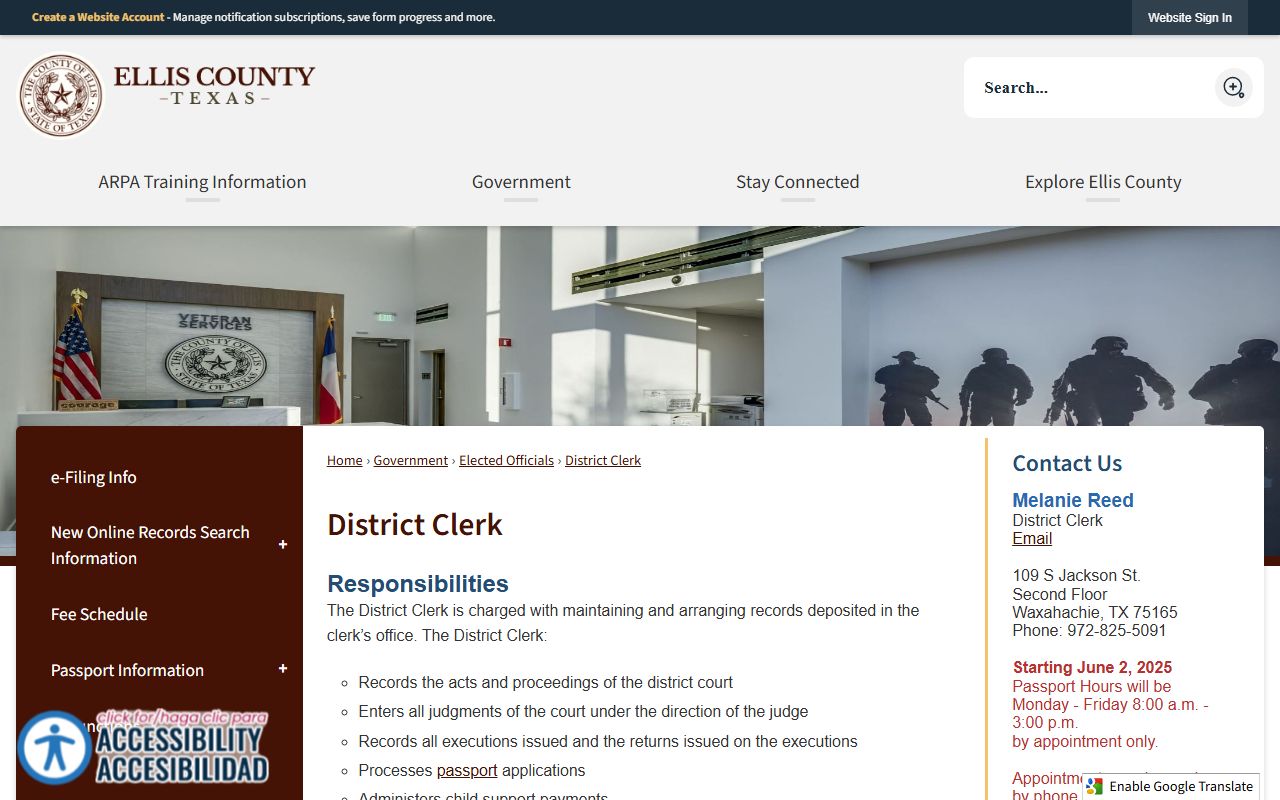
For arrest-related felony or district-court records, the District Clerk source helps separate court-record access from jail custody questions.
Prosecutor Review After an Ellis County Jail Arrest
The Ellis County and District Attorney's Office is at 109 S Jackson St., Waxahachie, TX 75165, and lists phone 972-825-5035, fax 972-825-5047, and Monday through Friday hours of 8 a.m. to 4:30 p.m. The office prosecutes felony, misdemeanor, and juvenile cases, provides protective orders and mental-health commitments, offers victim assistance, collects hot-check payments, advises county officials, and represents the Texas Department of Family and Protective Services. Its role explains why a court record can mature after the jail roster first appears.
The County and District Attorney page documents the prosecutor's local responsibilities and contact channels.
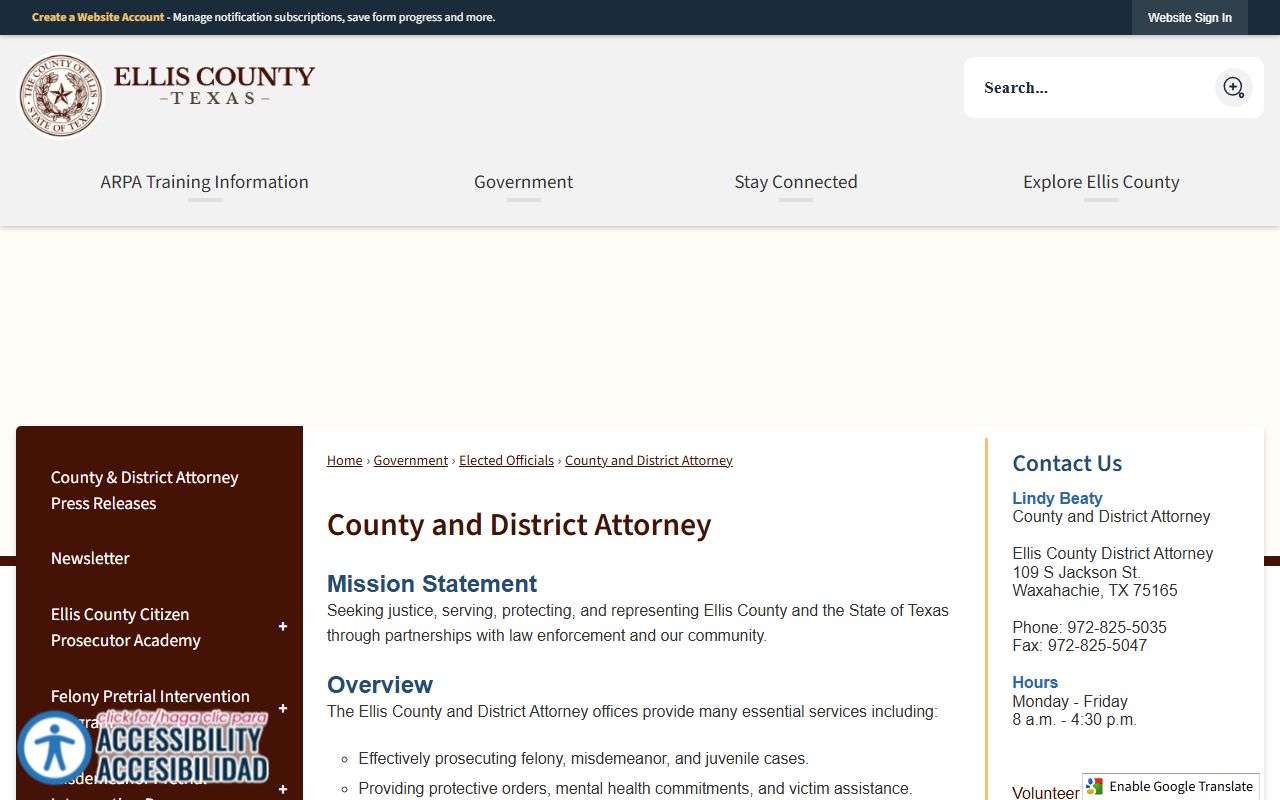
When a court-record entry differs from the arrest booking entry, prosecutor review is one of the main reasons the wording, number of charges, or status may have changed.
Public Record Search
Sponsored Results